

Jewellery has ever been something more than just a decoration—it’s a declaration, an emblem, and in numerous cultures, a beloved tradition. Where gold, silver, and precious gems have extended their undisputed reign over the realm of adornment, artificial jewellery has made its own exemplary mark on history. From ancient civilizations to fashion runways today, its is one of innovation, artistry, and accessibility.
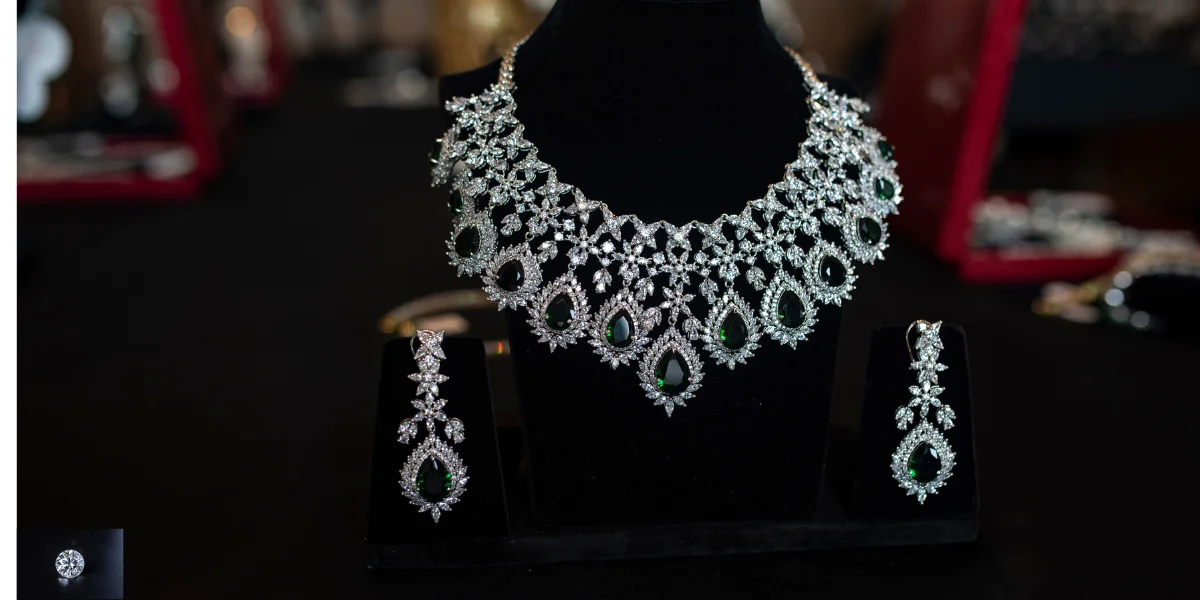
Ancient Beginnings: Where Ingenuity Met Beauty
The history of artificial jewellery goes back thousands of years. Before people learned to mine and work with gold or diamonds, they experimented with ways to adorn themselves. Archaeological discoveries indicate that Egyptians wore glass, clay beads, and painted stones to replicate valuable substances. Those early pieces weren’t solely for beauty purposes—they commonly held spiritual or protective significance.
Just as the Indus Valley Civilization (circa 2500 BCE) promoted its own style of imitation jewelry. Shells, bones, and worked stones were turned into necklaces and bangles, enabling even the non-privileged masses to indulge in the art of self-expression. Paste jewelry—colored glass jewelry—during ancient Rome caught on with the middle class, replicating the gleam of emeralds and rubies.
The Medieval Shift: Faith and Fashion
In the Middle Ages, jewelry was closely associated with social standing. The royal class, clergy, and wealthy nobility had possession of precious metals and gemstones. But the need for ornamentation went far beyond the nobility. Artisans started working with cheaper metals like copper and pewter, adorning them with enamel, painted glass, or artificial pearls to provide inexpensive jewelry for the masses.
Artificial jewelry of this period typically contained religious symbols—saints, crosses, and sacred symbols—and thus served to be a declaration of faith as well as a luxury within reach. Improved techniques in metalwork enabled craftsmen to create intricate designs that were close approximations of their costlier versions.
Renaissance Glamour and Innovation
The Renaissance (14th–17th century) was an age of prosperous art, culture, and innovation—and jewellery design was no exception. With expanding trade routes, imitation gemstones from Venice and Bohemia ended up in jewellery boxes all over Europe. Glassmakers mastered the technique of foiling—applying metallic foil behind a glass stone in order to add brilliance. This created jewellery that was blindingly beautiful but one quarter of the cost of real gems.
In India, the Mughal period introduced elaborate designs that incorporated semi-precious stones with gilded metals. Artisans incorporated faux gems cleverly into detailed settings, ensuring that regal designs became more affordable for the masses.
18th and 19th Centuries: The Dawn of Costume Jewellery
The 18th century saw a turning point with the advent of paste jewellery in France, supported by jeweller Georges Frédéric Strass. His leaded glass beads iridescently replicated diamonds, gaining popularity among royalty and common people alike. Queen Marie Antoinette herself wore paste jewels—testament to the fact that fashion was not necessarily tied to the cost of materials.
The 19th-century Industrial Revolution continued to revolutionize artificial jewellery. Mass production methods enabled sophisticated designs to be produced in quantity. Cheap metals such as brass and nickel were gold- or silver-plated, and glass “stones” were cut and finished to compete with real gems. This made jewellery accessible to the expanding middle class.
During Victorian England, sentimental jewellery became fashionable, with its tendency to include imitation gems, enamel portraits, and symbolic designs such as hearts, flowers, and anchors.
The 20th Century: Hollywood, Fashion, and Mass Appeal
The early 20th century saw the establishment of costume jewellery as a reputable fashion genre. Designers such as Coco Chanel famously asserted that jewellery is not only about wealth but style, and presented bold, glamorous artificial accessories that complemented her fashion creations.
Hollywood contributed a massive role to the popularity of the trend. Movie legends Marilyn Monroe and Audrey Hepburn stunned in showy artificial jewelry, propelling millions to adopt affordable glamour. Firms like Swarovski transformed the market with crystal-cut glass, providing unparalleled brilliance in non-precious stones.
In the mid-century, resin and plastic jewellery was popular—particularly in wartime, when metal was in short supply. Vibrant, playful Bakelite, Lucite, and acrylic designs characterized the retro jewellery aesthetic, which made fashion accessible and playful.
21st Century: Sustainability, Creativity, and Global Reach
Artificial jewelry is now hailed as an innovative, ethical, and practical option. With advancements in production, cubic zirconia, fine crystal, and simulated gems that match the appearance of natural gems are now available. Designers merge old-world craftsmanship with contemporary materials such as stainless steel, polymer clay, and reclaimed metals to create innovative, sustainable creations.
Artificial jewellery is no longer considered an imitation–it’s a fashion category unto itself. Fashionistas, celebrities, and ordinary wearers welcome it for its affordability, diversity, and ethical appeal. The world marketplace has everything from simple minimalist pieces for everyday wear to ostentatious statement pieces for red-carpet affairs.
Why Its History Still Shines Bright
The past of artificial jewellery is a testament to human ingenuity and the love of beauty that knows no borders. Through the centuries and across continents, craftsmen have managed to copy the riches of nature without losing their allure. From simple shells in ancient villages to Swarovski crystals on contemporary catwalks, artificial jewellery has always been evolving to suit cultural preferences, technological developments, and economic considerations.
It’s not just “fake” jewelry—it’s wearable art, a meeting of past and future, and an indication that fashion is about expression, not cost.